
 EN
EN

Industrial applications demanding reliable performance under extreme conditions require specialized components that can withstand high pressures, temperature fluctuations, and chemical exposure. The reinforced silicone tube has emerged as a critical solution for industries ranging from automotive manufacturing to pharmaceutical processing. These advanced elastomeric conduits combine the inherent flexibility and chemical resistance of silicone with structural reinforcement layers that dramatically enhance their pressure-handling capabilities. Understanding the engineering principles behind reinforced silicone tube construction and their performance characteristics is essential for selecting the optimal solution for demanding industrial environments.
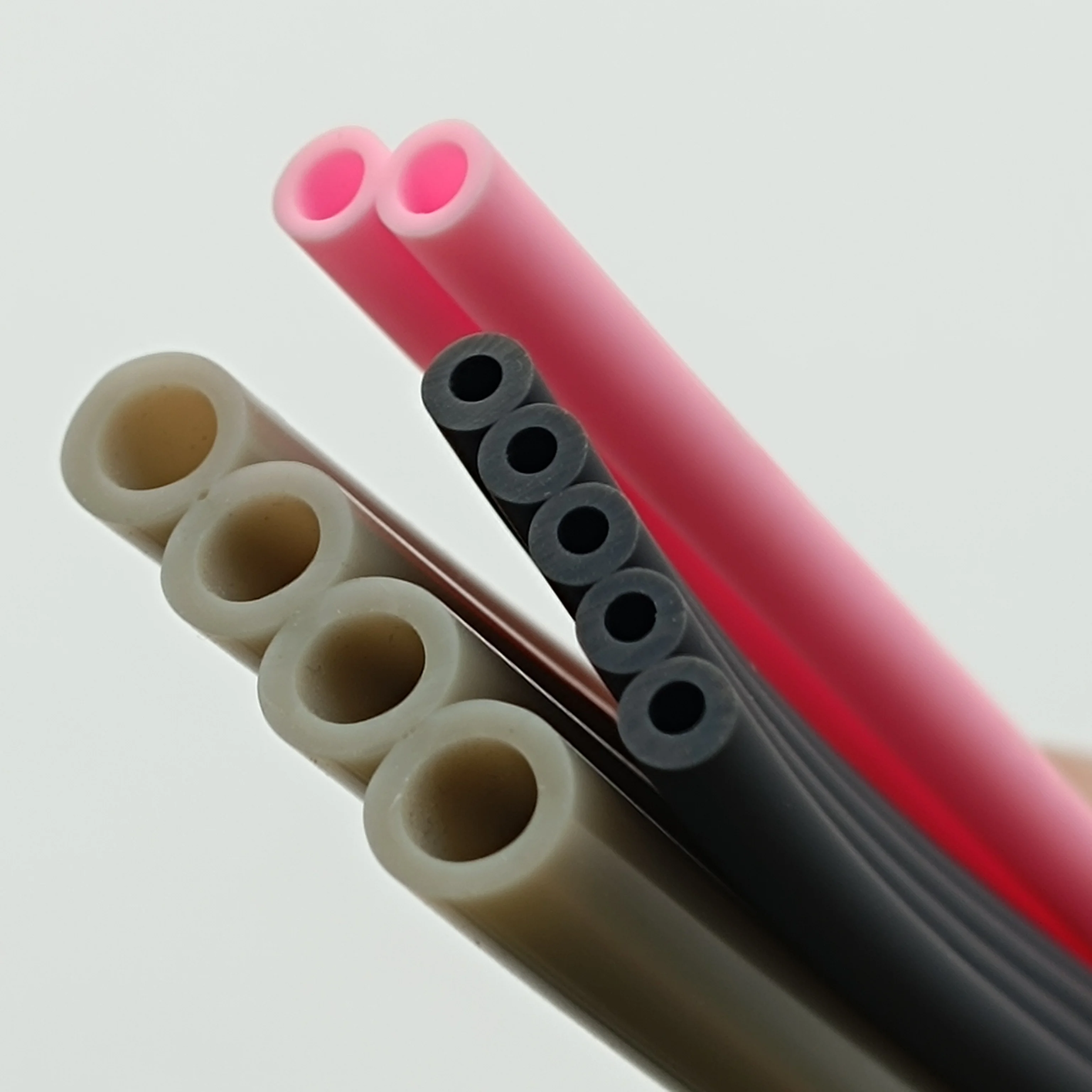
Engineering Fundamentals of Reinforced Silicone Tube Construction
Multi-Layer Architecture and Material Science
The structural integrity of a reinforced silicone tube relies on sophisticated multi-layer architecture that balances flexibility with strength. The innermost layer consists of high-grade silicone elastomer, carefully formulated to resist chemical degradation while maintaining smooth fluid flow characteristics. This primary layer is surrounded by reinforcement materials, typically braided textile fibers, metallic wire, or synthetic polymer strands that distribute mechanical stress across the tube's circumference. The outer protective layer provides additional chemical resistance and protects the reinforcement from environmental damage, creating a comprehensive barrier system that enhances the overall performance envelope of the reinforced silicone tube.
Advanced manufacturing processes ensure optimal adhesion between these distinct layers, preventing delamination under pressure cycling conditions. The silicone matrix is formulated with specific shore hardness ratings that complement the reinforcement material properties, creating a synergistic relationship that maximizes pressure tolerance while preserving the inherent flexibility that makes silicone tubes preferred over rigid alternatives. Temperature-resistant additives and UV stabilizers are incorporated during the curing process to extend service life in challenging environmental conditions.
Pressure Rating Calculations and Safety Factors
Determining the appropriate pressure rating for a reinforced silicone tube involves complex engineering calculations that consider multiple variables including wall thickness, reinforcement density, and operating temperature ranges. Industry standards require comprehensive burst testing at pressures significantly exceeding normal operating parameters, typically maintaining safety factors of 3:1 or 4:1 depending on the specific application requirements. The reinforcement geometry plays a crucial role in pressure distribution, with braided configurations providing omnidirectional strength that accommodates both internal pressure and external forces.
Dynamic pressure cycling tests evaluate the long-term performance characteristics of reinforced silicone tube assemblies under realistic operating conditions. These assessments simulate years of service life through accelerated testing protocols that subject samples to millions of pressure cycles while monitoring for signs of fatigue, stress cracking, or dimensional changes. The data generated from these evaluations establishes reliable working pressure limits and maintenance intervals that ensure safe operation throughout the expected service life of industrial equipment.
Industrial Applications and Performance Requirements
Automotive and Transportation Systems
The automotive industry represents one of the largest markets for reinforced silicone tube technology, particularly in applications involving engine cooling systems, turbocharger connections, and exhaust gas recirculation circuits. These environments subject tubing to extreme temperature variations, aggressive chemical exposure, and significant pressure differentials that would quickly compromise conventional rubber or plastic alternatives. The reinforced silicone tube excels in these demanding conditions due to its exceptional temperature stability, maintaining flexibility and sealing integrity across temperature ranges from -65°C to +300°C while resisting degradation from automotive fluids including coolants, oils, and fuel additives.
Heavy-duty transportation applications require reinforced silicone tube assemblies capable of handling hydraulic pressures exceeding 1000 PSI while maintaining precise dimensional tolerances that ensure proper fit and function within complex mechanical systems. The vibration resistance of properly designed reinforced silicone tube installations prevents fatigue failures that commonly occur with rigid piping systems, while the inherent flexibility accommodates thermal expansion and mechanical movement without compromising system integrity. Fleet operators increasingly specify reinforced silicone tube components for critical applications where system reliability directly impacts operational efficiency and maintenance costs.
Pharmaceutical and Food Processing Industries
Pharmaceutical manufacturing processes demand the highest levels of material purity and chemical compatibility, making the selection of appropriate tubing materials critical for product quality and regulatory compliance. The reinforced silicone tube meets stringent FDA regulations for food contact applications while providing the mechanical strength required for high-pressure cleaning and sterilization procedures. The non-porous surface characteristics of medical-grade silicone prevent bacterial contamination and facilitate thorough cleaning protocols that are essential in pharmaceutical production environments.
Food processing applications benefit from the exceptional chemical inertness of reinforced silicone tube materials, which do not impart taste, odor, or color to processed products while maintaining structural integrity under aggressive cleaning regimens involving high-temperature sanitizing solutions and caustic chemicals. The reinforced construction enables these tubes to handle the elevated pressures required for efficient product transfer and cleaning-in-place systems, reducing contamination risks and minimizing production downtime. Traceability requirements in pharmaceutical manufacturing are supported by advanced marking and documentation systems that track individual reinforced silicone tube components throughout their service life.
Performance Testing and Quality Assurance Protocols
Burst Pressure and Fatigue Testing Methodologies
Comprehensive testing protocols for reinforced silicone tube products encompass both destructive and non-destructive evaluation methods that validate performance characteristics under extreme conditions. Burst pressure testing involves gradually increasing internal pressure until failure occurs, providing critical data about the ultimate strength limits of the reinforced construction. These tests are conducted at various temperatures to establish performance envelopes across the intended operating range, ensuring that safety margins remain adequate under all anticipated service conditions.
Fatigue testing simulates the cyclic loading conditions encountered in real-world applications through automated test systems that subject reinforced silicone tube samples to millions of pressure cycles while monitoring for signs of degradation or failure. Advanced instrumentation measures dimensional changes, pressure loss rates, and visual indicators of stress concentration that could lead to premature failure. The data collected from these extensive testing programs forms the foundation for establishing reliable service life predictions and maintenance scheduling recommendations that optimize equipment uptime while maintaining safety margins.
Chemical Compatibility and Environmental Resistance
Chemical resistance testing evaluates the long-term compatibility of reinforced silicone tube materials with specific process fluids and environmental conditions encountered in industrial applications. Standardized immersion tests expose samples to concentrated chemicals at elevated temperatures for extended periods, measuring changes in physical properties including tensile strength, elongation, and hardness that indicate material degradation. The exceptional chemical resistance of silicone elastomers, combined with appropriate reinforcement materials, enables these tubes to maintain performance characteristics in aggressive chemical environments where other materials would fail rapidly.
Environmental stress testing subjects reinforced silicone tube assemblies to accelerated aging conditions including UV exposure, ozone concentration, and thermal cycling that simulate decades of service life in compressed time frames. These evaluations identify potential failure modes and establish realistic service life expectations for various environmental conditions. The superior environmental resistance of properly formulated reinforced silicone tube products enables extended maintenance intervals and reduces total cost of ownership in demanding industrial applications.
Installation and Maintenance Best Practices
Proper Fitting Selection and Assembly Techniques
Successful implementation of reinforced silicone tube systems requires careful attention to fitting selection and assembly procedures that ensure leak-free connections capable of maintaining system integrity under operating pressures. The flexibility characteristics of reinforced silicone tube materials necessitate specialized clamping techniques that provide adequate sealing force without damaging the tube structure or creating stress concentrations that could lead to premature failure. Proper fitting geometry and surface finish are critical factors that influence connection reliability and service life.
Installation procedures must account for the thermal expansion characteristics of reinforced silicone tube assemblies, providing adequate flexibility to accommodate dimensional changes while maintaining proper support and routing that prevents excessive stress from system vibration or mechanical movement. Bend radius limitations specific to the reinforcement construction must be observed to prevent kinking or reinforcement damage that could compromise pressure rating and service life. Professional installation training ensures that technicians understand the unique requirements of reinforced silicone tube systems and can implement best practices that maximize system reliability.
Preventive Maintenance and Service Life Optimization
Preventive maintenance programs for reinforced silicone tube installations focus on regular inspection procedures that identify potential issues before they result in system failures or safety hazards. Visual inspection protocols examine surface conditions for signs of abrasion, chemical attack, or mechanical damage, while dimensional measurements verify that the tube maintains proper fit and sealing characteristics. Pressure testing at regular intervals validates system integrity and identifies gradual degradation that might not be apparent through visual inspection alone.
Service life optimization requires systematic documentation of operating conditions, maintenance activities, and performance trends that enable predictive maintenance strategies. Advanced monitoring systems can provide real-time data about pressure, temperature, and flow conditions that help identify operational patterns that may accelerate wear or indicate the need for system modifications. The exceptional durability of properly maintained reinforced silicone tube installations often exceeds initial service life projections, providing excellent return on investment for industrial applications where system reliability is critical.
Cost-Benefit Analysis and Economic Considerations
Initial Investment versus Long-Term Value
The economic evaluation of reinforced silicone tube systems requires comprehensive analysis that considers initial material and installation costs against long-term operational benefits including extended service life, reduced maintenance requirements, and improved system reliability. While the initial cost of reinforced silicone tube assemblies typically exceeds conventional alternatives, the superior performance characteristics often justify the investment through reduced total cost of ownership and improved operational efficiency.
Lifecycle cost modeling demonstrates that the exceptional durability and chemical resistance of reinforced silicone tube products result in fewer replacement cycles and reduced maintenance interventions compared to alternative materials. The ability to operate reliably in extreme conditions eliminates the need for frequent inspections and emergency repairs that can significantly impact production schedules and operational costs. Insurance considerations may also favor reinforced silicone tube installations due to their superior safety record and reduced risk of catastrophic failures.
Return on Investment Calculations
Quantifying the return on investment for reinforced silicone tube upgrades requires detailed analysis of current maintenance costs, system downtime expenses, and replacement part expenditures that can be eliminated or reduced through implementation of superior materials and designs. Production efficiency improvements resulting from more reliable fluid handling systems contribute additional value that may exceed the direct cost savings from reduced maintenance requirements.
Energy efficiency benefits associated with the smooth interior surfaces and optimal flow characteristics of reinforced silicone tube systems reduce pumping costs and improve overall system efficiency. Environmental benefits including reduced waste from longer service life and improved recyclability may provide additional economic incentives through regulatory compliance advantages and corporate sustainability initiatives. The comprehensive value proposition of reinforced silicone tube technology extends beyond simple cost comparisons to encompass operational excellence and risk mitigation factors that are increasingly important in competitive industrial markets.
FAQ
What pressure ratings can reinforced silicone tubes typically handle in industrial applications
Reinforced silicone tube assemblies can typically handle working pressures ranging from 150 PSI to over 2000 PSI depending on the specific reinforcement configuration, wall thickness, and diameter. High-performance designs with multiple braided reinforcement layers can achieve even higher pressure ratings for specialized applications. The actual pressure rating depends on factors including temperature, chemical compatibility, and safety factor requirements specific to each application.
How do reinforced silicone tubes perform compared to metal piping in high-pressure systems
Reinforced silicone tubes offer several advantages over metal piping including superior flexibility, vibration dampening, and resistance to thermal cycling stress. While metal piping may achieve higher absolute pressure ratings, reinforced silicone tubes provide better fatigue resistance and accommodate system movement without requiring expansion joints or complex routing. The weight reduction and corrosion resistance of reinforced silicone tube systems often outweigh the pressure rating advantages of metal alternatives in many applications.
What maintenance intervals are recommended for reinforced silicone tube installations
Maintenance intervals for reinforced silicone tube systems typically range from 12 to 36 months depending on operating conditions, with more frequent inspections recommended for critical applications or extreme service environments. Visual inspections should be conducted quarterly to identify potential issues early, while comprehensive pressure testing and dimensional verification are typically performed annually. Preventive replacement intervals are often established at 5 to 10 years based on service history and operating conditions.
Can reinforced silicone tubes be repaired in field conditions or do they require complete replacement
Most reinforced silicone tube failures require complete replacement rather than field repair due to the complex multi-layer construction and the critical importance of maintaining pressure integrity. Emergency temporary repairs may be possible using specialized clamps or wrapping systems, but these should only be considered short-term solutions until proper replacement can be accomplished. The reliability and safety requirements of high-pressure industrial systems generally preclude permanent field repairs of reinforced silicone tube assemblies.
Table of Contents
- Engineering Fundamentals of Reinforced Silicone Tube Construction
- Industrial Applications and Performance Requirements
- Performance Testing and Quality Assurance Protocols
- Installation and Maintenance Best Practices
- Cost-Benefit Analysis and Economic Considerations
-
FAQ
- What pressure ratings can reinforced silicone tubes typically handle in industrial applications
- How do reinforced silicone tubes perform compared to metal piping in high-pressure systems
- What maintenance intervals are recommended for reinforced silicone tube installations
- Can reinforced silicone tubes be repaired in field conditions or do they require complete replacement